

Poured-in-place rubber, often shortened to PIP, is the seamless, cushioned surface found under many school and park playgrounds. It is mixed and troweled on site, so it fits the exact shape of the play area and leaves no loose material to kick away or top up.
This post explains how poured-in-place surfacing is built, the benefits that make it a popular choice, the trade-offs to plan for, and the care it needs to keep protecting children for years.
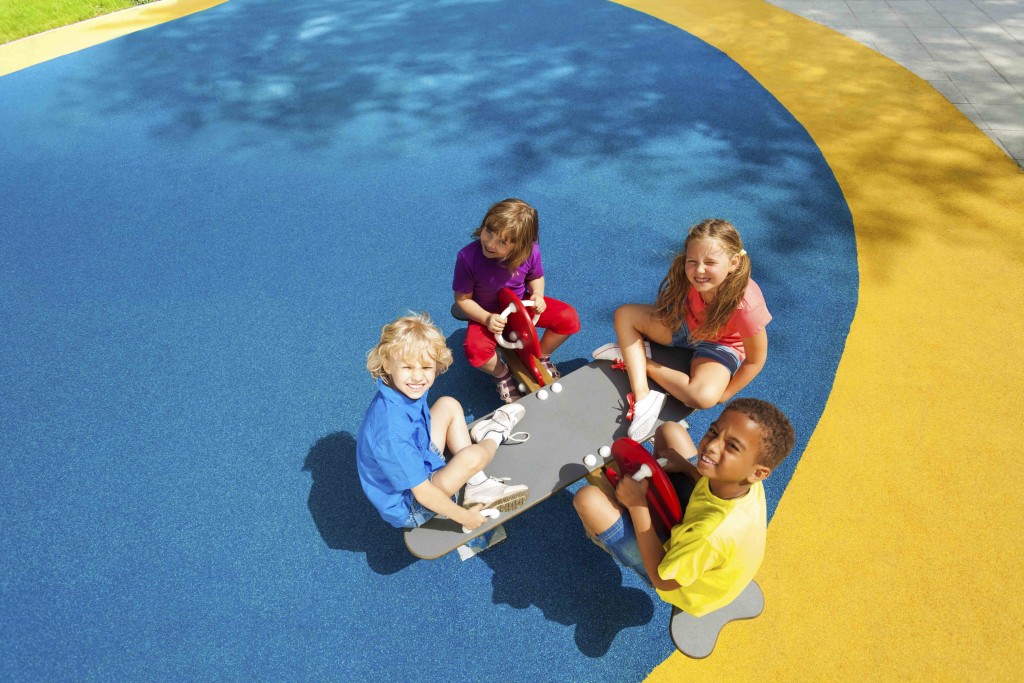
How Poured-in-Place Surfacing Is Built
PIP goes down in two layers over a prepared, stable base, typically compacted aggregate or concrete:
- The cushion layer. A thick base of rubber granules, commonly recycled tire rubber, held together with a polyurethane binder. This layer does most of the work of absorbing a fall, and its thickness is set by the fall height of the equipment above it.
- The wear layer. A thinner top layer of colored rubber granules, often EPDM, bound the same way. It provides the color, the texture and resistance to daily wear.
Each layer is spread and hand-troweled, then left to cure. Because it is formed in place, the surface can follow curves, slopes and the outline of every piece of equipment, and it is porous, so rain drains through to the base below.
The Benefits of Poured-in-Place Surfacing
Fall protection matched to the equipment
The cushion layer can be made thicker under taller equipment and thinner where play is closer to the ground. Playground surfaces are tested under ASTM F1292, the standard for impact attenuation of surfacing within the use zone of playground equipment, which establishes the fall height a surface protects against. Your installer should be able to show test data for the exact system and thickness proposed. The standard is available from ASTM International.
Accessibility
A firm, smooth, continuous surface lets wheelchairs, walkers and strollers roll across the play area, which makes PIP one of the most direct ways to create an accessible route to and through a play space. The 2010 ADA Standards for Accessible Design point to ASTM F1951 for accessible play area surfaces, and PIP systems are commonly tested to it. You can read the ADA requirements for play areas on the official ADA website.
Little daily upkeep
There is nothing to rake back under swings or top up after a busy season. Routine care is mostly sweeping, blowing off debris and an occasional rinse.
Design freedom
Colors can mark zones, paths and themes, and the surface can carry graphics such as hopscotch grids, numbers or a winding river. Color can also do practical work, for example outlining the area around a swing that children should not walk through.
Nothing to scatter
Loose fill can be thrown, carried onto paths or tracked indoors. PIP stays where it was poured, which daycares and schools with entrances near the play area tend to appreciate.
Trade-Offs to Plan For
- Higher upfront cost. PIP usually costs more to install than loose-fill surfaces, though it avoids their ongoing topping up. Compare the cost over the surface’s life, not installation alone.
- Heat. Rubber absorbs heat in direct sun, and dark colors run hotter than light ones. Lighter colors and shade structures over the play area help keep the surface comfortable.
- Weather during installation. The binder needs dry conditions to cure, so installation is scheduled around rain and temperature.
- Wear over time. Slide exits, the ground under swings and other high-traffic spots wear first, and sunlight fades color over the years. Worn areas lose cushioning and need repair.
- Repairs can show. Damaged sections can be cut out and patched, but new material may not match the faded color around it.
Caring for a Poured-in-Place Surface
- Sweep or blow off sand, leaves and debris regularly, since grit grinds at the wear layer.
- Rinse with water and a mild cleaner as needed. Avoid harsh solvents and high-pressure washing, which can loosen granules.
- Walk the surface often and look for loose granules, cracks, seams pulling apart, lifting edges and thin spots.
- Repair small problems early. A small patch is simpler than a large failed area.
- Keep vehicles, sharp tools and heavy machinery off the surface.
A surface that looks fine can still lose cushioning as it ages, so include it in periodic professional inspections. A-OK Playgrounds offers CPSI-certified playground safety inspections against ASTM F1487, CPSC guidelines and ADA, with a written report and repair plan.
Where Poured-in-Place Fits Best
PIP is a strong choice for school and park playgrounds with heavy daily use, for inclusive play areas where accessibility is a priority, and for daycares that want a clean, low-mess surface. It also works as a border or path inside a play space that uses a different surface elsewhere. Some sites combine materials, using PIP along accessible routes and in high-wear zones and another surface in the remaining areas to manage cost.
Frequently Asked Questions
How thick does poured-in-place surfacing need to be?
It depends on the fall height of the equipment, which is measured from its highest designated play surface. Taller equipment needs a thicker cushion layer. The installer should specify the thickness from tested data for the system being used.
Can PIP go over an existing surface?
Sometimes. A concrete or asphalt base in good condition can often serve as the base, while loose fill has to be removed and a proper base built. A site assessment decides which applies.
Does water drain through PIP?
Yes. Standard PIP is porous, so water passes through to the base. That is why the base itself must be built to drain, because a surface laid over ground that holds water will develop problems.
Plan Your Playground Surfacing with A-OK Playgrounds
A-OK Playgrounds supplies playground safety surfacing, including poured-in-place rubber, along with equipment, 3D design and professional installation in many areas. Call 512-826-8800, email [email protected] or request a quote. Digital catalogs are available on request.