

Ask a group of children what they like about a playground and you will hear about the fastest slide, the highest platform and the game they invented with friends. Those answers are worth taking seriously. A playground children enjoy gets used every day, while one they find dull sits empty or gets used in ways it was never designed for.
Here is what kids look for on outdoor playground equipment, why each kind of play matters for their development and how to turn those preferences into a play space they keep coming back to.
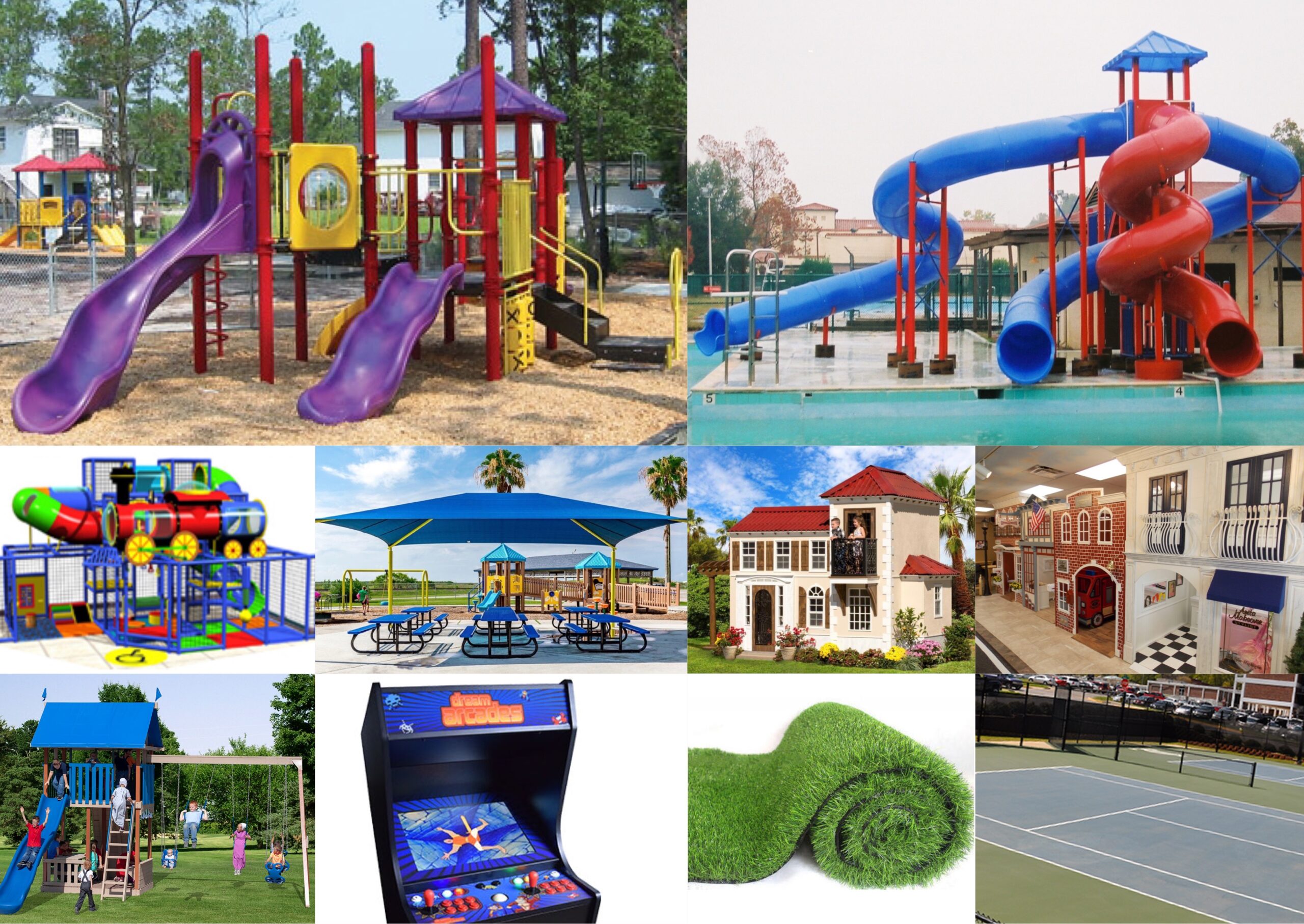
Movement: Swinging, Sliding and Spinning
The equipment children run to first is usually the equipment that moves them. The rush of air on a swing, the quick drop of a slide and the world turning on a spinner are exciting, and they are also good for development. These motions work the vestibular system, the inner-ear sense of balance and movement, which helps children build coordination and body awareness.
Speed and motion can be delivered at a scale that suits each age. A slide formed from molded polyethylene tubes can twist and turn while keeping the rider enclosed, and spinners and rockers come in sizes for small children and for older ones. If you want a slide shaped around a particular deck height, turn or landing, see our custom playground slides.
Height and the Thrill of a Challenge
Children love to test themselves. Reaching the top of a climber, crossing a wobbly bridge or finally making it across the overhead rungs gives them a real sense of achievement, which is why height and challenge appear on almost every child’s list of favorites.
The best playgrounds offer graduated challenge: a range of difficulty, from routes a newcomer can manage to ones that take several visits to master. When a child cannot do everything on the first try, there is a reason to come back. When every element is too easy, older children tend to invent their own challenges, such as climbing onto roofs or the outside of barriers, which is exactly the play you want to avoid. Climbers, ladders, rock walls and overhead events at a few levels of difficulty give children room to grow.
Imagination and Pretend Play
Not every child wants to race to the top. Many spend their time inside a story, where the deck becomes a ship, the playhouse a store and the tunnel a secret passage. Pretend play builds language, planning and cooperation, because children have to agree on the rules of the game they are making up.
Equipment supports this best when it leaves room for the child’s own ideas. Playhouses, tunnels, steering wheels, windows and themed panels give a starting point without scripting the game. A playhouse set a little apart from the main structure also gives quieter children a place away from the busiest equipment, and our outdoor playhouses are a good place to start.
Playing Together
Much of what children enjoy on a playground is each other. Equipment built for two or more, such as seesaws, group swings, talk tubes and spinners with several seats, turns a structure into a social space. So does a layout that lets children chase each other in a loop: up a ladder, across a bridge, down a slide and around again.
Social play is where children practice taking turns, negotiating and including others. A good design offers both kinds of space: open areas where a group can gather and smaller corners where one or two children can play quietly.
Variety Keeps a Playground Busy
Children lose interest when a playground offers only one kind of experience. Variety spreads a crowd across the site and keeps different ages and personalities engaged at the same time. When you review a design, check that it includes:
- Something to climb, at more than one level of difficulty
- Something to slide down
- Something that swings, rocks or spins
- A place to pretend, hide or start a game
- Equipment that needs two or more children to work
- Sensory features to touch, turn, listen to or explore
- Places to sit, rest and watch
Modular structures make variety easier to plan, because decks, climbers, slides and activity panels can be combined to suit the site and the age group. Browse our modular play structures to see how the pieces come together.
Every Child Wants to Join In
Children notice when a friend cannot follow them. Accessible routes, ground-level play features, ramps or transfer platforms and supportive swing seats let children of different abilities play side by side, and playing together is what they want most. Inclusive design also helps younger siblings and children who are still building confidence.
Parents add one more item to the list. They look for equipment that is clean and well kept, with soft surfacing underneath. Children rarely mention safety, but a playground that feels safe to parents is one families return to.
Frequently Asked Questions
What playground equipment do kids like most?
Swings, slides and climbers are long-standing favorites with almost every age group. Beyond those, preferences vary with age and personality, which is why a mix of equipment matters more than any single piece.
How do we keep older kids interested?
Give them real challenge: taller climbers, harder routes and overhead events, ideally on a structure designed for ages 5 to 12 rather than one shared with toddlers. Bored older children are more likely to misuse equipment, so challenge is a safety benefit as well as a fun one.
Does more equipment always mean more fun?
Not necessarily. A smaller set of well-chosen pieces that offer different kinds of play, arranged so children can move between them, can get more use than a crowded site where everything does the same thing.
Design a Playground Kids Will Love
A-OK Playgrounds designs, supplies and installs commercial playgrounds for schools, churches, parks, HOAs and other communities, and our 3D design and site planning help you see how each kind of play fits your space. Call 512-826-8800, email [email protected] or request a quote. Digital catalogs are available on request.