

Once your equipment is chosen, the next decision is who will put it in the ground. Outdoor playgrounds are usually installed in one of three ways: by a professional crew, by your own people working under an experienced installation supervisor, or entirely by your own team or volunteers.
This guide explains each option, the site preparation every outdoor installation needs no matter who does the work, and how to choose the approach that fits your budget, your people and your schedule.
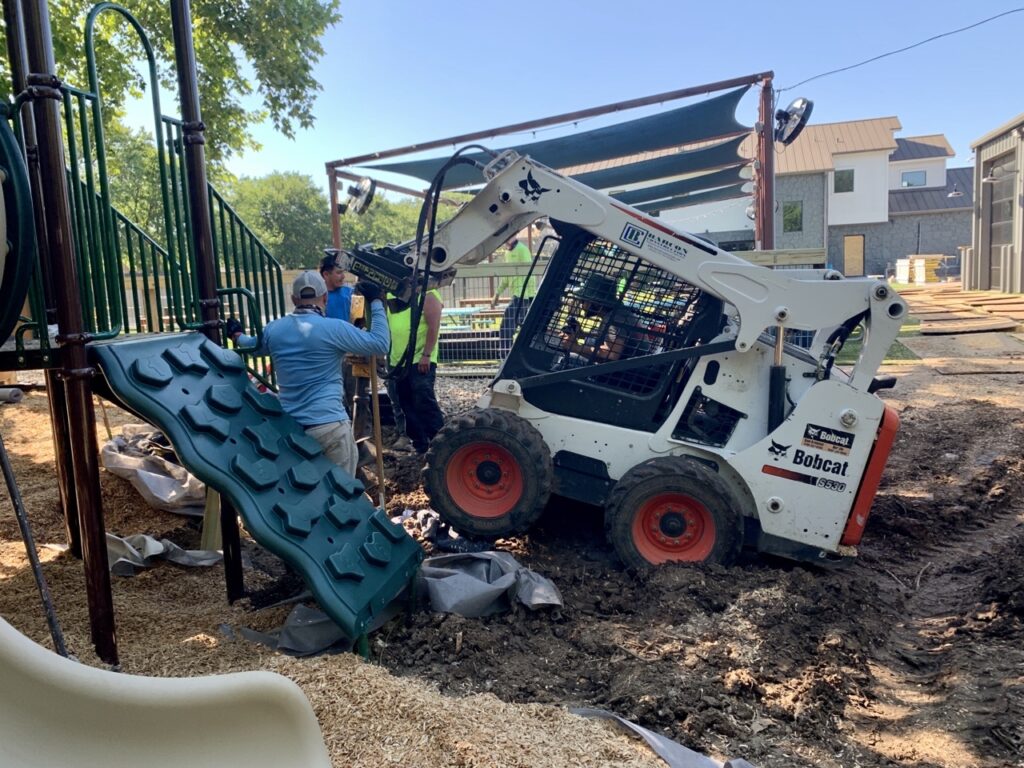
Site Preparation Comes First
Every outdoor installation starts with the ground. Whoever installs the equipment, these steps decide whether the playground stays level, drains well and stays safe:
- Site assessment: confirm that the full footprint fits, including the use zone around each piece of equipment. Under CPSC guidelines, the use zone for most stationary equipment extends at least six feet in every direction, and swings and slides need more. That space must stay clear of fences, buildings, trees, benches and paths.
- Utility locates: call 811 before any digging so underground lines are marked. Post footings can easily reach the depth of buried cables and pipes.
- Drainage and grading: the area needs to shed water. A play area in a low spot will hold water, wash out loose-fill surfacing and soften the ground around footings.
- Access: delivery trucks need a route to the site, and the crew needs room to unload and stage parts close to where they will be installed.
- Approvals: some cities require permits for playgrounds, shade structures or concrete work, and HOAs and campuses often have their own approval steps.
Full Professional Installation
A professional crew handles the installation from start to finish. With A-OK Playgrounds, playground installation is carried out by certified crews and covers the site assessment, safety surfacing, equipment assembly and a final safety inspection before the playground opens. The crew brings the tools and the experience, and your staff stay focused on their own work.
This option suits most schools, municipalities and apartment communities, and any organization without a pool of experienced volunteers. It also makes sense for larger or more complex projects, such as several structures on one site, shade structures set in concrete footings, or poured-in-place rubber surfacing, which calls for specialized installers. Installation is available in many areas of the country, so confirm coverage for your location when you ask for a quote.
Supervised Installation
In a supervised installation, your organization supplies the labor and the tools, and an experienced installation supervisor directs the work on site. The supervisor reads the plans, sets the order of work, checks footings and fasteners, and keeps volunteers working safely and efficiently.
This middle path suits churches, schools and community groups that have willing, capable people but little installation experience. It generally costs less than full professional installation while reducing the mistakes volunteers tend to make on their own. Plan for a dependable number of helpers every day, since the supervisor’s time is scheduled around your people showing up.
Customer or Volunteer Installation
Some organizations install the equipment themselves so more of the budget can go toward equipment. It can work, but it asks a lot. Before choosing it, be honest about these points:
- Experience: does anyone on the team have experience setting posts in concrete, leveling structures and following detailed assembly drawings?
- Tools: post-hole augers, concrete mixing equipment, levels, torque tools and safety gear may need to be rented or borrowed.
- Time: volunteer availability tends to shrink after the first weekend. Plan the full schedule, not just the build day.
- Surfacing: loose-fill safety surfacing must be installed, and kept, at the depth required for the equipment’s fall height. Poured-in-place rubber is not a volunteer job.
- Inspection: have a certified inspector check the finished playground before children use it. Our playground safety inspection services include a written report and a repair plan.
Hold a planning meeting with your volunteers in advance, walk through the assembly instructions together and confirm that every tool and part is on hand before the build day. If that meeting raises more questions than answers, supervised installation is probably the better fit.
How to Choose Between the Three
- Choose full professional installation when you want one team accountable for the result, when the project is large or complex, or when the site needs significant preparation.
- Choose supervised installation when you have dependable volunteers and want expert direction at a lower cost.
- Choose customer installation only when your team has real construction experience and the time to finish properly, and budget for a professional inspection afterward.
Whichever you choose, ask for equipment, freight and installation to be listed as separate lines on your quote. That lets you compare options fairly and change one without guessing at the others.
Frequently Asked Questions
Does surfacing go in before or after the equipment?
Generally after. The posts and footings are set first, and the surfacing is installed around them. With loose-fill materials, the borders and drainage are usually prepared early so the fill stays contained, and poured-in-place rubber is poured once the equipment is in place.
Can we install part of the project ourselves?
It can be possible. Some organizations have a professional crew set the structure and surfacing, then use volunteers for lighter work such as landscaping or benches. Raise it when you ask for a quote, and agree on the split before work begins so responsibilities are clear.
Plan Your Installation with A-OK Playgrounds
We can help you compare installation options for your site and put together a quote that shows each one clearly. Call 512-826-8800, email [email protected] or request a quote online. Digital catalogs are available on request.