

Leasing and financing both let you put a new playground in place without paying the full cost on day one, but they work in different ways. Financing makes you the owner from the start. A lease lets you use the equipment while someone else owns it, at least until the term ends.
This guide explains how each option works, what happens at the end of the term, which kinds of organizations each one tends to suit, and the practical steps to get started.
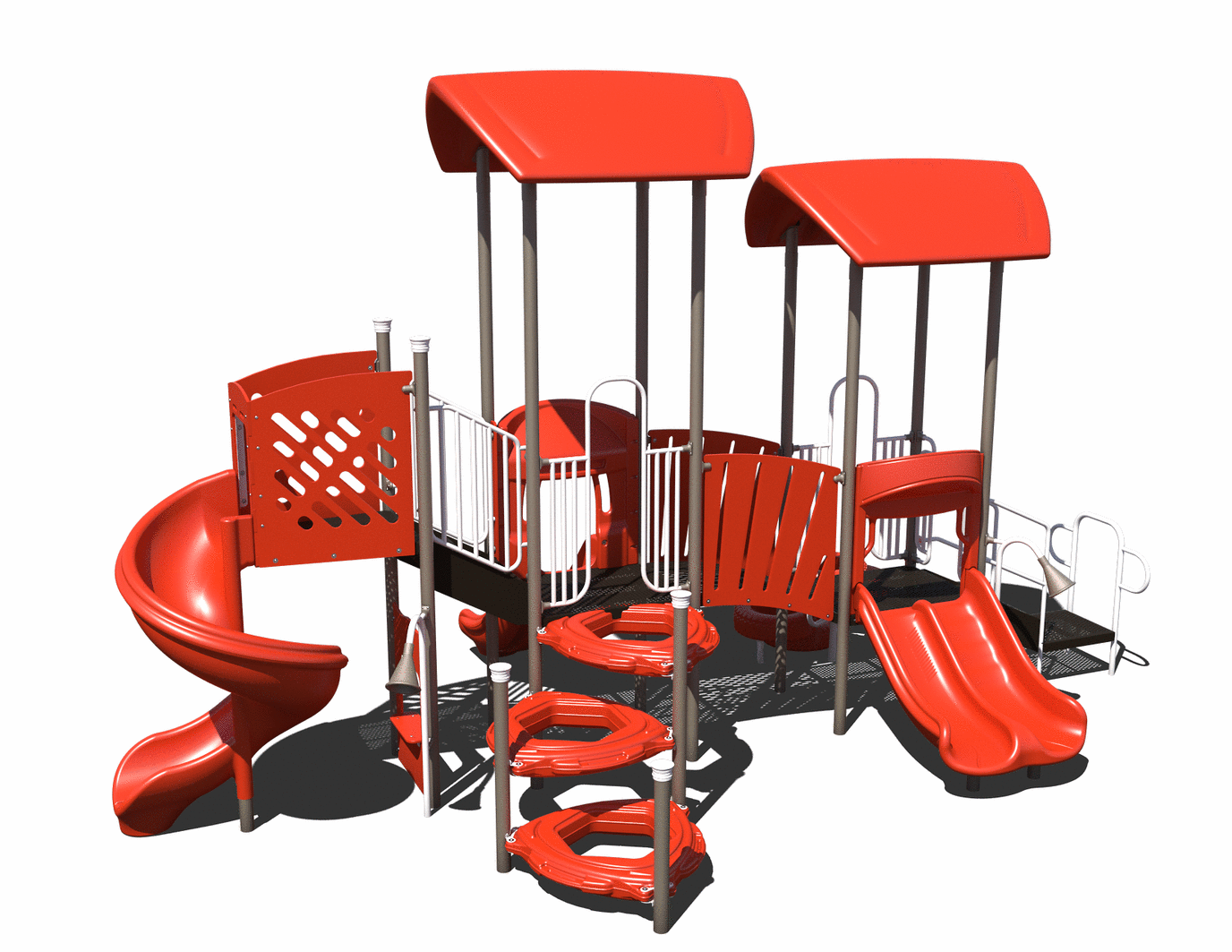
What Financing Means for a Playground Purchase
Financing is a loan for the equipment. You buy the playground, a lender pays for it, and you repay the lender in fixed installments with interest over an agreed term. In most financing arrangements you are the owner from the start, although the lender usually holds a claim on the equipment until the balance is paid.
Because you own it, the playground sits on your books as an asset, and when the last payment is made there is nothing more to decide: you simply keep using it. That makes financing a natural fit for equipment you expect to keep for many years, which describes most well-built outdoor playgrounds.
How a Playground Equipment Lease Works
With a lease, a leasing company owns the equipment and you pay for the right to use it over a set term. Payments are fixed, so they are easy to budget, and the amount due at signing can be lower than the down payment on a loan. What really defines a lease is the end of the term. Depending on how the agreement is written, you will usually have some combination of these choices:
- Buy the equipment for a nominal amount or for its fair market value at that time.
- Renew the lease and keep using the same equipment.
- Return the equipment, or replace it with something newer under a new agreement.
A lease that ends with a nominal buyout works much like financing, because you are clearly heading toward ownership. A fair market value lease can keep payments lower in exchange for an open question at the end. Read the end-of-term clause first, since it decides which of the two you are really signing.
Also ask how a return would work in practice. A playground set in concrete footings is not something you simply hand back, so for permanent outdoor equipment a lease that ends in ownership is usually the more practical shape.
Leasing and Financing Side by Side
- Ownership: financing makes you the owner from the start. A lease keeps ownership with the leasing company until you use a purchase option.
- Cash at the start: both reduce what you pay upfront compared with buying outright.
- Payments: both are usually fixed. The total cost depends on the rate, the term and any buyout, so compare the full amount paid over the life of each agreement, not only the monthly figure.
- End of term: a loan ends with the balance paid off. A lease ends with a decision to buy, renew or return.
- Accounting and tax: the two are treated differently on financial statements and, for taxable businesses, on tax returns. Ask your accountant to confirm how each would be treated for your organization.
Who Each Option Tends to Suit
There is no single right answer, but some patterns hold across the kinds of organizations that buy play spaces.
Schools, churches, HOAs and municipalities
These buyers usually plan to keep a playground for many years and answer to a board, a council or a congregation. Ownership tends to matter to them, and the bigger challenge is timing: money arrives with a new fiscal year, a grant award or the end of a fundraising campaign. Public bodies often use a lease-purchase agreement, which ends in ownership and can be structured around annual budget approvals. A-OK Playgrounds offers financing and leasing for these organizations, built around grant cycles, fiscal years and approval timelines.
Daycares, apartment communities and family entertainment centers
For a business, the play space is part of how it attracts families, keeps residents or sells admission. Keeping cash free for payroll, rent or the next expansion often matters more than owning the equipment outright on day one, so a lease or a loan with a small upfront payment can be the better fit. Owning the equipment at the end still matters to many of these buyers, which is why the end-of-term terms deserve a close read.
What a Lease or Loan Can Cover
Equipment is only part of a playground budget. Safety surfacing under and around the equipment, shade, borders, freight and professional installation all add to the total, and a project that funds the structure but not the surfacing can stall before it opens. When you ask for a quote, ask for the whole project to be priced, and ask whether every line can be included in the same agreement. The same applies indoors, where theming and padded flooring belong in the plan from the beginning.
How to Get Started
- Define the project. Decide who will use the space, which age groups it serves (2 to 5, 5 to 12 or both), how much room you have and whether it is indoors or outdoors.
- Get a design and a full quote. A 3D design and site plan show your board exactly what it is approving, and a complete quote gives the lender or leasing company the right amount to work with.
- Discuss payment options early. Explain your fiscal year, grant timing or approval process when you ask about playground financing and leasing, so the agreement is shaped to fit it.
- Prepare your paperwork. Expect to provide basic financial information about your organization. Public bodies and nonprofits may also need board minutes or a resolution that authorizes the agreement.
- Review the terms. Check the rate, the term, the total cost, the end-of-term options and what happens if you want to pay early.
- Sign, order and schedule. Once the agreement is approved, the equipment can be ordered and the installation planned around your site and calendar.
Frequently Asked Questions
Can a school, church or HOA lease playground equipment?
Yes. Leasing is not limited to businesses. Schools, churches, HOAs and municipalities can use leases and lease-purchase agreements, and these are often set up to follow a fiscal year or a board approval cycle. The paperwork differs from a business application, so mention the type of organization when you first ask.
Do we own the playground at the end of a lease?
Only if the agreement says so or you use a purchase option. A lease with a nominal buyout is designed to end in ownership, while a fair market value lease leaves the decision, and the price, until the end of the term.
Can financing be combined with grants or fundraising?
In many cases, yes. Some organizations finance the full project so the playground opens on time, then pay down the balance as donations arrive. If you plan to do this, confirm before signing that early payment is allowed and whether it carries a fee, and check that your grant permits its funds to be used this way.
Plan Your Project with A-OK Playgrounds
Whether you want to own your playground from day one or keep cash free with a lease, we can help you plan the equipment and the payments together. Call 512-826-8800, email [email protected] or request a quote online. Digital catalogs are available on request.