

Children grow fast between the ages of 2 and 5. A two-year-old may still be steadying on stairs, while a five-year-old is ready to climb, balance and race friends to the slide. Equipment for this age has to serve both ends of that range without exposing the youngest to heights and moving parts they cannot handle yet.
This guide explains how preschoolers play, which outdoor equipment suits them, the safety rules that apply to this age group and how to lay out the space so caregivers can see and reach every child. It is written for daycares, preschools, churches and parks planning a dedicated area for young children.
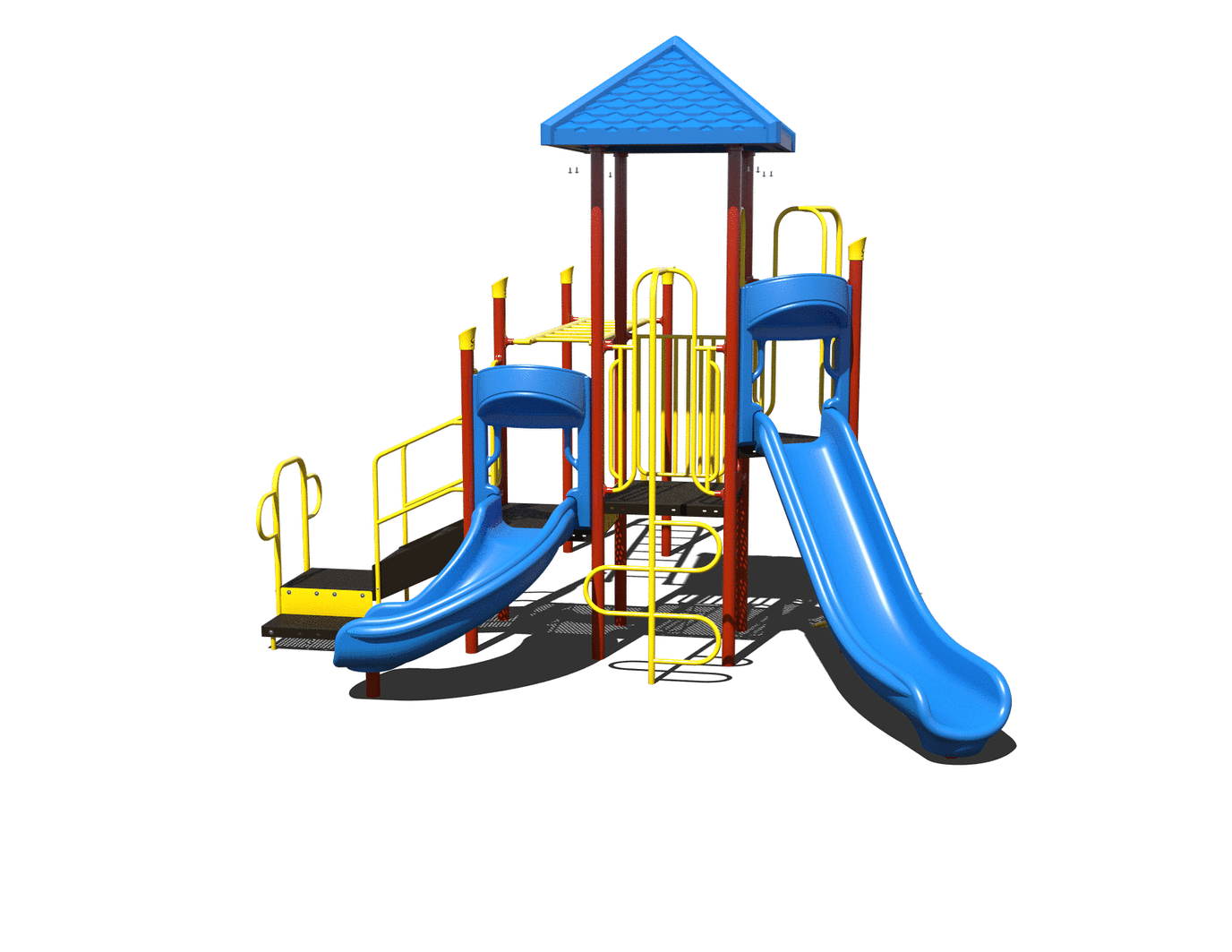
How Children Ages 2 to 5 Play
Preschoolers learn through movement and repetition. They climb the same steps and ride the same slide again and again, and every round builds balance, strength and confidence. A play area for this age should give each area of development something to work on:
- Gross motor skills: climbing steps, crawling through tunnels, hopping across low stepping stones and walking up gentle ramps.
- Fine motor skills: turning knobs and gears, sliding beads and scooping or pouring sand.
- Thinking and language: cause and effect, colors and shapes, and simple pretend games.
- Social skills: two-year-olds tend to play beside other children, while four- and five-year-olds start to play with them in shared games.
Equipment That Fits This Age
Low Decks, Ramps and Steps
Decks for preschoolers sit close to the ground and are reached by short stairs, ramps or gentle climbers with handholds. Wide steps and handrails let a two-year-old climb at their own pace, while slightly harder routes give older preschoolers a challenge.
Short, Gentle Slides
Slides for this age should be short, with a gentle slope and a smooth exit at the bottom. Raised sides help keep a child centered on the way down, and a wide entry lets a small child sit down and settle before letting go.
Bucket Swings
Full bucket seats with high backs and leg openings support toddlers who cannot yet hold themselves on a belt seat. Keep them away from the belt swings older children use, ideally in a bay or frame of their own, and leave clear space in front of and behind every swing.
Spring Riders and Rockers
Spring riders and rockers give small children motion they control themselves. Low seats, footrests and handholds keep them stable while they build core strength and balance.
Sensory and Activity Panels
Panels with gears, mirrors, chimes, textures and simple puzzles hold a preschooler’s attention at ground level. They also give children who are not ready to climb something rewarding to do right next to their friends.
Sand and Water Play
Shallow sand areas and simple water features such as hand pumps and channels invite digging, pouring and building, and teach cause and effect. Plan for drainage and for a way to cover the sand when the area is closed.
Safety Rules for the 2 to 5 Age Group
The standard for public playground equipment, ASTM F1487, covers children ages 2 to 12 and sets different requirements for the 2 to 5 and 5 to 12 groups, for example in the platform heights at which guardrails or protective barriers are required. Equipment for children under 2 falls under a separate ASTM standard. The CPSC’s public playground guidelines also treat preschool and school-age equipment separately. In practice, that means:
- Use equipment designed for ages 2 to 5. A structure intended for ages 5 to 12 has heights and climbing features sized for bigger, stronger children, even when it looks small.
- Separate the age groups. If older children share the site, give them their own structure, with a buffer such as a walkway or planting bed between the areas and signs showing the intended ages.
- Keep some equipment in the older area. The CPSC’s public playground handbook lists equipment it does not recommend for preschool-age children, including vertical sliding poles and chain or cable walks. Ask your supplier to check each piece against that list.
- Put the right surfacing under everything. Every piece needs impact-absorbing surfacing rated for its fall height, covering the whole use zone around it and not only the ground directly underneath. See our playground safety surfacing options.
- Watch for hot surfaces. Slides, decks and steps in direct sun can get hot enough to burn young skin, so check them on warm days and plan shade.
Laying Out the Space for Supervision
A two-year-old can set off in a new direction the moment an adult looks away, so the layout should help caregivers see and reach every child:
- Keep sightlines open. Avoid tall solid panels and enclosed spaces where a child can stay out of view, and face benches toward the equipment.
- Bring caregivers close. Shaded seating near the equipment keeps adults beside the play instead of at the edges. Shade structures over both the equipment and the seating make hot days easier for everyone.
- Define the boundary. A fence with a limited number of gates makes it easier to keep track of small children. Licensed child care programs may also have state rules for outdoor play areas, so check yours before the design is final.
- Plan a ground-level route. A firm, accessible path to every area helps strollers, caregivers with mobility needs and children who use mobility devices.
When it is time to build, certified crews can handle the playground installation from the first site visit through surfacing and assembly to a closing safety inspection, so the finished play area matches the plan.
Frequently Asked Questions
Can children ages 2 to 5 use a playground built for ages 5 to 12?
It is not recommended. Structures for older children have higher platforms and climbing features sized for bigger, stronger bodies. If both age groups use the site, add a separate structure for ages 2 to 5 and post signs showing which area is meant for whom.
Is one structure enough for a preschool?
Often it is. A well-planned 2 to 5 structure, combined with bucket swings, a sand or sensory area and some open ground for running, gives preschoolers plenty of variety. What matters most is a mix of activities at the right scale, not the size of the structure.
Plan Your Preschool Playground With A-OK Playgrounds
A-OK Playgrounds offers outdoor playground equipment built for preschoolers as well as older children, along with 3D design and site planning for daycares, schools, churches and parks. Call 512-826-8800, email [email protected] or request a quote. Digital catalogs are available on request.