

Summer is when outdoor spaces should be at their busiest, and it is also when the sun drives people away. A commercial shade structure fixes that for playgrounds, patios, waiting lines and courts. It is also one of the first things visitors notice: a clean, well-placed canopy tells people the property is cared for and that someone thought about their comfort.
This guide explains what commercial shade structures are, the main types, what they do for a business, how to choose one, and the summer safety habits that still matter on a shaded playground.
What a Commercial Shade Structure Is
A commercial shade structure is a steel frame with a tensioned fabric canopy, built for public use and set on permanent footings. Canopies are commonly made from a knitted high-density polyethylene fabric that blocks much of the sun’s ultraviolet light, while the open weave lets hot air pass through instead of trapping it underneath.
Shade structures are different from park shelters, which have solid roofs. A shelter keeps off rain as well as sun, while fabric shade is lighter, more open and easier to span over play equipment. Many properties use both: fabric shade over the playground and a shelter for tables and gatherings.
Common Types of Shade Structures
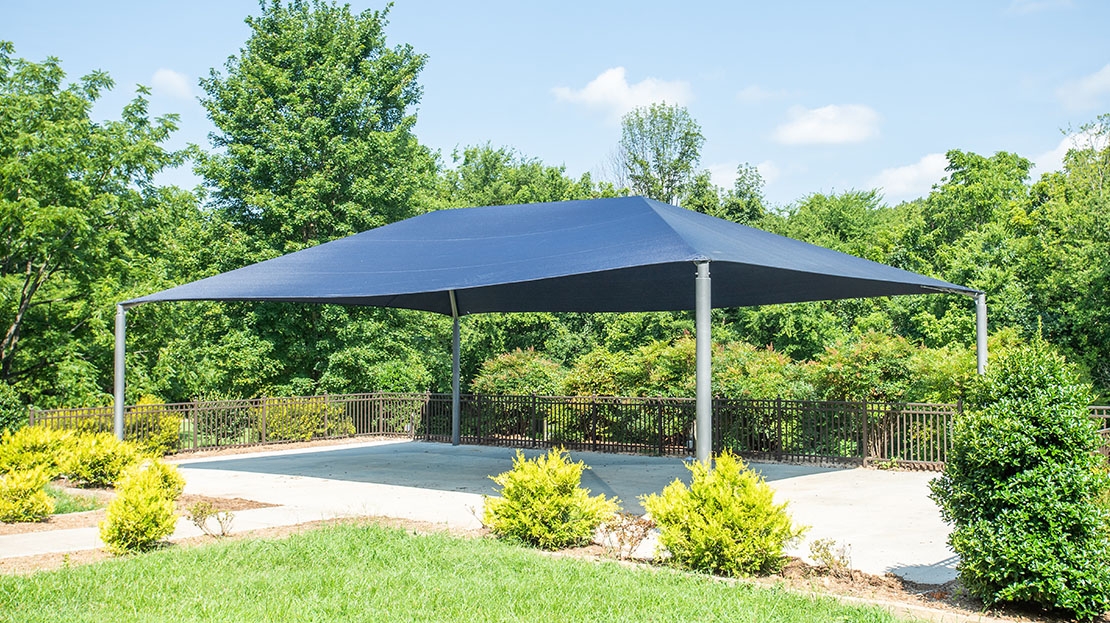
- Hip shades. A four-sided, pyramid-style canopy on a square or rectangular frame, like the one pictured. A dependable choice over play structures, seating and small courts.
- Single-post umbrellas. One central column holding a square, round or hexagonal canopy. Good for tables, pool decks and spots where you want the smallest footprint.
- Cantilever shades. Columns on one side with the canopy reaching out over the area, so posts stay clear of play, vehicles or spectators.
- Sail shades. Angled, overlapping sails with a modern look, popular at restaurants, retail centers and building entrances.
- Large-span and multi-post shades. Bigger frames that cover whole playgrounds, bleachers, outdoor dining areas or parking.
You can see the range of shapes and sizes among our commercial shade structures.
What Shade Does for a Business
The case for shade goes beyond comfort:
- A better first impression. A crisp canopy in colors that suit your building makes an outdoor area look finished and inviting from the street.
- More usable hours. Patios, play areas and waiting lines stay usable through summer afternoons instead of emptying out.
- Longer visits. Families tend to stay when parents have a shaded place to sit and children can keep playing.
- Less sun wear on what you own. Shade reduces the fading and weathering that strong sun causes on play equipment, outdoor furniture and surfacing.
- A visible commitment to safety. Schools, daycares and parks show parents they take sun exposure seriously.
How to Choose the Right Structure
- Define what needs shade, and when. Map the areas people actually use during the hottest hours, not just the footprint of the equipment.
- Check height and clearance. Over a playground, the canopy has to clear the tallest deck, roof and slide on the equipment, and the posts need to sit outside the use zones around it.
- Consider wind and site conditions. Open, exposed sites put more load on a canopy, so the structure should be engineered for your location.
- Pick fabric colors deliberately. Colors can echo your branding or blend into the landscape. Ask how each color performs for shade and fading before you decide.
- Plan for upkeep. Fabric eventually needs replacing, and tension and hardware should be checked on a schedule. Ask about care before you buy.
- Line up the budget. Schools, churches, HOAs and municipalities can use financing and leasing timed to grant cycles and fiscal years.
Summer Playground Safety, Even Under Shade
Shade lowers the risk on a hot day, but it does not remove it. Keep these habits on any summer playground:
- Touch-test before play. Slides, steps, swing seats and some surfaces can get hot enough in direct sun to burn skin. The U.S. Consumer Product Safety Commission warns about contact burns from sun-heated equipment in its Public Playground Safety Handbook. Check with the back of your hand first.
- Keep using sunscreen. Shade cuts direct sun, but light still reflects off pavement and other surfaces, and the shaded area shifts through the day.
- Bring water. Children run hard and lose fluids fast in the heat. Do not count on a fountain being there or working; carry water and take breaks.
- Watch for insects. Wasps and bees can nest under decks, inside tubes and in canopy frames. If you see a nest, keep children away and report it to whoever runs the playground.
- Let surfaces dry after rain. Summer storms can leave platforms, steps and slides slippery. Give them time to dry before play starts again.
- Look for sun damage. Long exposure can make plastic parts brittle. Report cracks, splits or loose clamps and hardware right away.
Operators should back these habits with routine checks and a professional review. A CPSI-certified playground safety inspection measures your equipment against ASTM F1487, CPSC guidelines and ADA requirements, and comes with a written report and repair plan.
Frequently Asked Questions
Can a shade structure go over an existing playground?
Often, yes. The canopy has to be sized to clear the equipment, and its footings need to sit outside the play use zones and away from underground utilities. A site assessment shows what the space allows before you commit.
Do shade structures need a building permit?
In many places, yes. Requirements vary by city and county, and engineered drawings are commonly requested. Check with your local building department early so the permit does not hold up the schedule.
Get Shade Planned with A-OK Playgrounds
A-OK Playgrounds supplies commercial shade structures for playgrounds, schools, churches, parks, HOAs and businesses, with 3D design and site planning to show how a canopy fits your space. Call 512-826-8800, email [email protected] or request a quote. Digital catalogs are available on request.