

Picture a pond projected onto a playroom floor. A child steps toward it, the fish scatter, and within seconds a small crowd is chasing them across the room. There is no controller to hand out, no menu to learn and no rules to read. That is the thrill of a projection video game.
This post looks at projection play from the player’s side: how it feels, the kinds of games on offer, which games suit which ages, why groups play so well together and what keeps children coming back. If you are thinking about adding a projection game, it helps to know what your visitors will actually do with it.
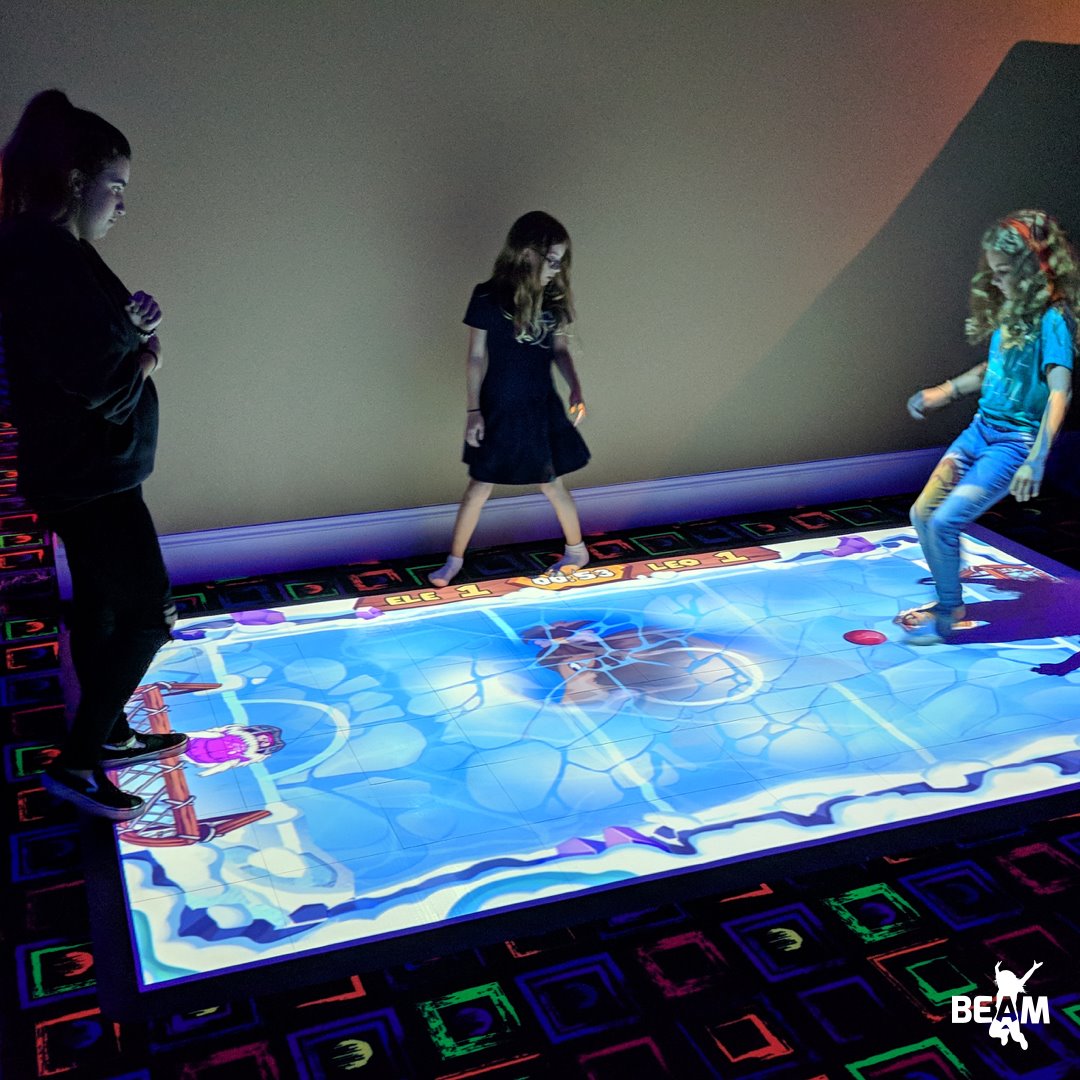
How It Feels to Play
A projection game puts the game where the player is. A projector shows the picture on a floor or wall, and a sensor watches for movement. When a foot lands on a target or a hand touches a bubble, the picture reacts at once. The player’s own body is the controller.
That direct link between moving and seeing a result is what sets it apart from a screen game. Nothing has to be learned first. Children work out the idea by trying it, and the game rewards them the moment they move.
Types of Games Players Enjoy
Projection systems usually carry a library of games, and variety is part of the fun. Common styles include:
- Chase and catch games, where players stomp on bugs, pop bubbles or scatter animals before they escape.
- Sports-style games, such as kicking a projected ball into a goal or guarding a net.
- Learning games built around colors, shapes, letters and numbers, where the right answer is a spot to jump on.
- Creative wall games, where touching the surface paints, draws or reveals a hidden picture.
- Calm scenes of water, leaves or sand that ripple and part as someone walks through, which suit quieter moments.
- Team challenges, where two sides race to claim their half of the floor or score the most points.
Matching Games to Ages
The same floor can serve very different players, as long as the game fits the age group in front of it.
Toddlers and Preschoolers
The youngest players love simple cause and effect: step here and something happens. Large, slow targets, bright colors and gentle sounds work best, and games with no score or timer let them play at their own pace. Keep them in a separate, supervised zone away from older, faster children, in the same way you would set aside an indoor toddler play area.
School-Age Children
From around age five, children want a challenge. Scores, levels, timers and the chance to beat a friend keep them interested. Learning games can step up too, with spelling, counting or quick math built into the action.
Teens and Adults
Older players are drawn in by speed and competition. Fast reaction games and team matches give parents, older siblings and even staff a reason to join in rather than stand and watch.
Why Group Play Works So Well
Many video games are built around one or two players holding controllers. A projected floor belongs to whoever is standing on it, which changes the experience:
- Less waiting. A child can walk up and join a game already in progress.
- Natural teamwork. Shared goals, such as clearing the floor together, get children talking and planning.
- Friendly competition. Team modes split a group into sides without anyone explaining complicated rules.
- Room for mixed ages. A younger sibling can still pop bubbles while older children chase points.
Players also watch each other as much as the game, so a projection zone tends to draw a crowd. Children walking past see the action and want a turn.
What Keeps Players Coming Back
The excitement of anything new fades in time. Projection games have a few qualities that help them hold attention:
- Instant feedback. Every movement gets a response, so players feel in control.
- Short rounds. Quick games suit short attention spans and let new players rotate in.
- Constant variety. Switching to a new game changes the whole experience without changing the room.
- Whole-body movement. Running, jumping and reaching turn screen time into active play, which parents tend to welcome.
Venues can add to this by rotating the games on offer, scheduling games for younger and older players at different times, and keeping the room dim enough for a crisp picture. Surrounding the zone with theming that matches the games, such as an ocean mural beside an underwater scene, makes the space feel like part of the adventure.
Frequently Asked Questions
Can children who use wheelchairs play?
Often, yes. Wall games played by touch, and floor games that react to movement over a target rather than only to footsteps, can include children using wheelchairs or walkers. Ask the supplier which games suit seated play and keep the route to the play zone clear. The ADA website explains the accessibility standards that apply to public spaces.
Is running on a projected floor safe?
The game itself is just a projected image, so the safety points are the same as for any active play: a floor that is not slippery, sensible group sizes, an adult keeping watch and younger children kept apart from older, faster players.
Bring Projection Play to Your Space
A-OK Playgrounds supplies floor and wall projection games as well as complete indoor play spaces, and can help you choose a system that suits the ages you serve. Explore our interactive play systems, then call 512-826-8800, email [email protected] or request a quote. Digital catalogs are available on request.