

An interactive projection game turns an empty patch of floor or a blank wall into a playing field. Children step on, touch or chase the projected images, and a motion sensor makes the game respond. Most children take to it straight away, so the real question for a business or organization is a different one: will it earn its place in your space and your budget?
This guide covers who buys projection games, how they pay their way, what they cost to own beyond the purchase, what the room needs and what to ask a supplier. It is written for the owners, directors and managers who make the decision.
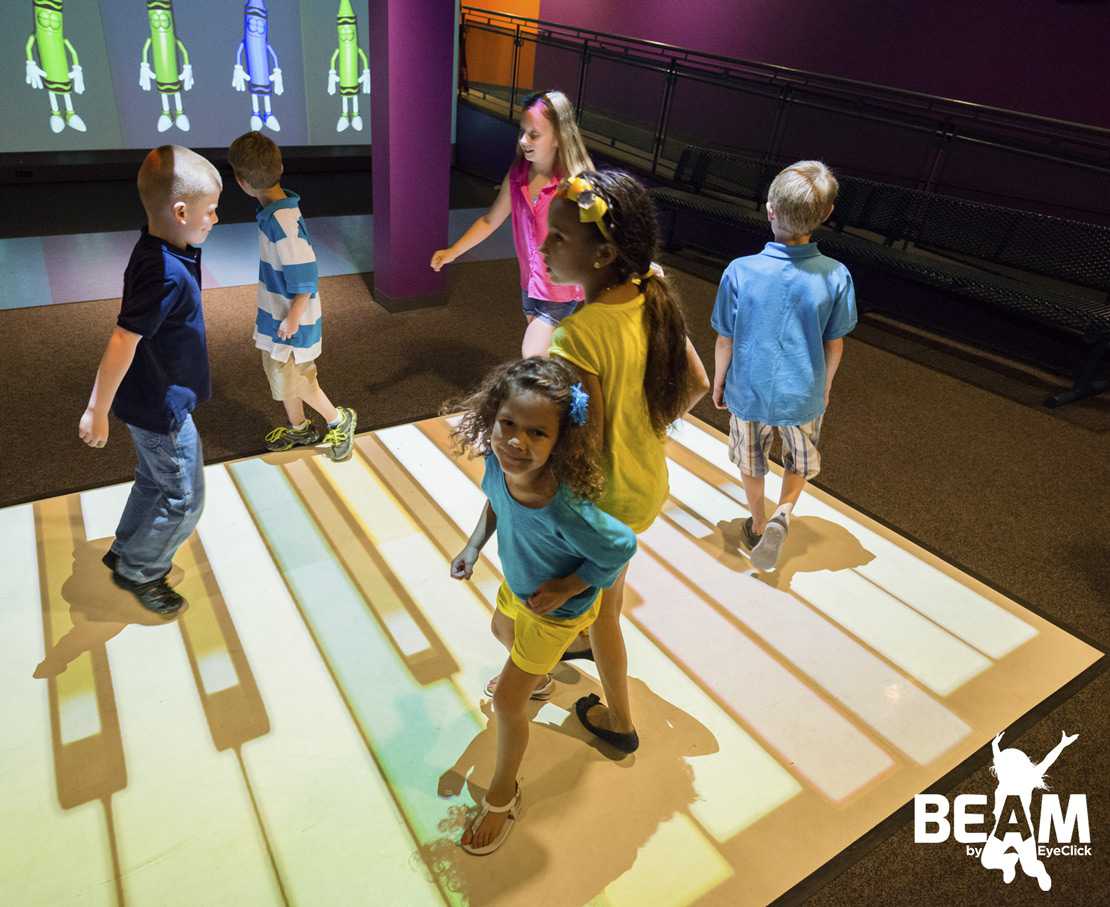
Who Invests in Projection Games
Projection systems turn up wherever children spend time with adults close by and every square foot has to work hard. Typical buyers include:
- Family entertainment centers adding an attraction that fits between larger rides and play structures.
- Restaurants and cafes with a kids’ corner that keeps families relaxed and at the table.
- Daycares, preschools and schools that need active indoor play when the weather keeps children inside.
- Churches and community centers running a children’s area during services, meetings and events.
- Waiting rooms in clinics, dental offices and service businesses, where an occupied child makes the visit easier for everyone.
- Apartment communities, hotels and resorts looking for an amenity room that families will actually use.
What these buyers have in common is limited floor space and a need for activity that runs without a dedicated operator. You can read how A-OK Playgrounds supports many of these groups on our who we serve page.
How a Projection Game Pays Its Way
A projection game rarely earns money the way a coin-operated arcade machine does. Its value usually shows up in the rest of the business. Decide which of these matter to you:
- Longer visits. When children are happily busy, parents stay longer. In a restaurant or entertainment center, that can mean another order or another activity.
- Return visits. Systems typically come with a library of games that can be switched, so the attraction does not look the same every time a family returns.
- Parties and group bookings. A game zone that a whole party can play at once is an easy addition to birthday packages and group visits.
- Value at the door. In a paid play venue, a projection zone adds to what a day pass or membership includes, which supports the price you charge.
- A reason to choose you. For daycares, schools and churches, a modern play feature stands out on tours and open days, when parents are comparing options.
Be realistic about which of these apply. A dental office will measure success in calmer appointments rather than revenue, and that can be reason enough.
The Cost of Ownership, Not Just the Price
Prices vary widely by system, image size and game library, so ask for a complete quote instead of comparing headline figures. A realistic budget includes:
- The projector and sensor unit, plus its mount or protective enclosure.
- Installation, including any ceiling or wall work and the power and network connections.
- The game library, and whether new games and updates come with an ongoing subscription or license fee.
- Parts that wear over time, such as the projector’s light source.
- Changes to the room, such as blinds or dimmable lighting, so the image stays easy to see.
Compared with a large play structure, a projection system takes up very little floor space and has no climbing parts, so routine upkeep is light: mainly keeping the lens and sensor clean. The tradeoff is that it is electronic equipment with a working life, so plan for repair and eventual replacement as you would for any technology. Schools, churches, HOAs and municipalities can ask about playground financing and leasing built around grant cycles, fiscal years and approval timelines.
What the Space Needs
A projection game is only as good as the room it is in. Before you choose a system, check these points:
- Mounting height. Floor games are usually projected from above, so the size of the play area depends on how high the unit can be mounted and on its lens. A low ceiling means a smaller image or a different kind of unit.
- Light control. Daylight and bright overhead lights wash out a projected image. A room you can dim, or a corner away from large windows, plays far better.
- The surface. A flat, light-colored, matte floor or wall gives the clearest picture. Busy patterns and glossy finishes make the game harder to see.
- A clear zone. Keep furniture and fixed objects out of the play area so children can run and jump safely, with an open route in and out.
- Power and service access. The unit needs power at the mounting point, and someone must be able to reach it safely for cleaning and repairs.
If the projection zone shares a room with indoor playground equipment, plan the two together. A-OK Playgrounds offers 3D design and site planning, so you can see where each piece fits before anything is ordered.
Questions to Ask Before You Buy
- Is the system built for commercial use, with a sturdy mount that children cannot reach or tamper with?
- How many games are included, what ages are they designed for, and can we choose which ones run?
- Are new games and software updates included, or is there a recurring fee?
- Does it work on the floor, on a wall or both, and can it be moved if we rearrange the room?
- What does the warranty cover, and who services the unit if something fails?
- Can it switch on and off on a schedule, so staff do not have to manage it?
Clear answers to these questions matter more than a long feature list. You can browse the floor and wall projection games we supply in our interactive play and virtual reality systems.
Frequently Asked Questions
Do projection games need a dedicated room?
No. Many are installed in a corner of a lobby, dining area or play center. What they need is a mounting point, a suitable surface, a clear play zone and lighting you can control. A separate room makes light control easier, but it is not required.
Can a projection game replace a play structure?
It works best as an addition. A projection game delivers quick, active rounds of play in a small footprint, while a play structure offers climbing, sliding and balance challenges that a projected image cannot. Many venues offer both so children can move between them.
Plan Your Project with A-OK Playgrounds
Whether a projection game is your first interactive feature or part of a complete indoor play area, A-OK Playgrounds can help you plan the space and choose a system that suits your visitors. Call us at 512-826-8800, email [email protected] or request a quote. Digital catalogs are available on request.