

A well-planned sport court can host physical education classes in the morning, a youth league in the afternoon and residents or members in the evening. Getting there takes more than pouring a slab and painting lines. The decisions made early, about which sports to include, where the court sits and what surface goes on top, shape how well the court plays and how long it lasts.
This guide walks organizations through planning a new multi-sport court, and through the question every court owner eventually faces: when to resurface and when to rebuild. It is written for schools, churches, HOAs, apartment communities, parks departments and businesses weighing a court project.
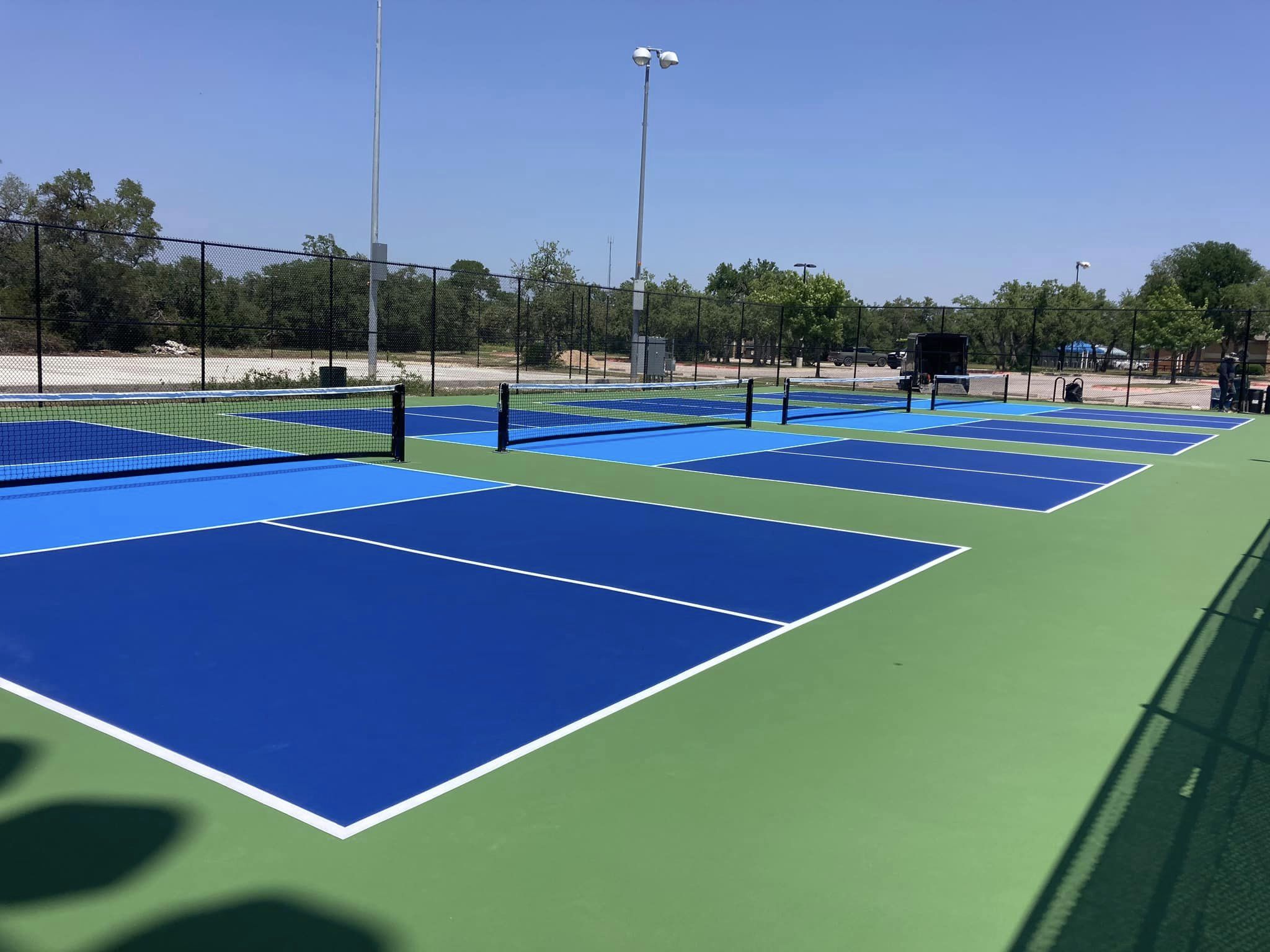
Start With How the Court Will Be Used
The most useful planning question is not what to build, but who will use the court, when, and for what. A court used by an elementary school at recess needs different hoop heights and line choices than one used by adult residents after work. Before talking about surfaces, write down:
- The primary sport, the one that will get the most hours, and any secondary sports.
- The age groups and skill levels you expect, from young children to adult leagues.
- Peak times of use, which tells you whether lighting is worth planning for.
- Whether the court will host organized programs, open play or both.
- Who will manage scheduling, cleaning and repairs once it opens.
When two sports compete for the same hours, a shared court can create friction. Sometimes the better answer is a dedicated court for the busiest sport and shared lines for the rest.
Combining Sports on One Court
Multi-sport courts work because several popular games share the same basic need: a flat, hard, true surface with good traction. Basketball, pickleball, tennis and volleyball can all be lined on one slab. A few planning points make the difference between a court that serves everyone and one that frustrates everyone:
- Line colors. Each sport gets its own line color so players can follow their game. Too many overlapping lines get confusing, so most owners settle on two or three sports rather than five.
- Equipment that moves. Net posts set in ground sleeves, adjustable hoops and portable nets keep the surface clear for whichever game is being played.
- Size. The footprint is set by the largest game you include. A court sized for tennis can hold several smaller layouts, but a half-court basketball pad cannot hold a tennis court.
- Clear space. Every sport needs room beyond its boundary lines so players can chase a ball without running into a fence, post or bench.
What Goes Into Building a Sport Court
A court is only as good as what lies beneath it. Most outdoor courts follow the same sequence:
- Site assessment. Soil conditions, slope, drainage paths, trees, utilities and access for construction equipment are checked before the design is final.
- Grading and base. The ground is shaped and a compacted aggregate base is installed. Courts are built with a slight slope so rain sheds off the playing surface instead of pooling.
- The slab. Concrete or asphalt forms the structural layer. Concrete is generally the more rigid option, while asphalt is often chosen for a lower initial cost. Either one will crack if the ground beneath it moves.
- The playing surface. Common choices are a multi-layer acrylic coating applied to the slab, sometimes with cushioned layers for comfort, or interlocking modular tiles that sit on top of the slab.
- Lines, equipment and finishing. Striping, hoops, net posts, fencing, lighting and seating complete the court.
Shortcuts in the early steps are the usual reason a court develops problems in its first few years. Poor drainage and an under-built base show up later as cracks, low spots and standing water. If lighting may be added later, running conduit during construction avoids cutting into a finished court.
Planning the Space Around the Court
The court itself is only part of the project. The areas around it decide whether people enjoy using it.
- Fencing and windscreens keep balls in play and protect nearby parking, windows and walkways.
- Lighting extends playing hours, but light spill toward nearby homes should be considered from the start.
- Shade and seating give parents, teammates and spectators a comfortable place to wait. Shade structures and park shelters beside the court are one of the simplest comfort upgrades.
- An accessible route. For court sports, the 2010 ADA Standards for Accessible Design call for at least one accessible route that directly connects both sides of the court. The standards are published on the official ADA website.
- Water and restrooms matter for courts that host leagues or long sessions.
Resurfacing an Existing Court
Even a well-built court wears. Sun, water, temperature swings and daily play gradually break down the coating on top. Resurfacing restores the playing surface without replacing the base, and it is usually the right call when the slab underneath is still sound.
Signs a court needs resurfacing
- Faded color and lines that are hard to read.
- Hairline cracks spreading across the surface.
- Areas that hold water for hours after rain.
- Spots that have turned slick, or worn rough down to the slab.
- Peeling or flaking coating.
What resurfacing involves
A typical resurfacing project starts with a thorough cleaning, followed by crack repair and filling of low spots. New coating layers are then applied and the court is restriped. It is also the natural moment to change the line layout, for example adding a second sport to a court that was originally lined for one.
When resurfacing is not enough
If cracks are wide and keep reopening, if sections of the slab have heaved or settled, or if water is undermining the base, coating over the problem only hides it for a short time. In those cases the base needs repair or reconstruction first. An honest site assessment tells you which situation you are in before any coating is bought.
Budgeting and Approvals
Courts are often funded through capital budgets, fundraising or grants, and many organizations need board or council approval at each stage. If the full plan is out of reach, build it in phases: a well-built base and playing surface first, then lighting, shade or extra amenities later. A-OK Playgrounds offers financing and leasing options for schools, churches, HOAs and municipalities, structured around grant cycles, fiscal years and approval timelines.
Set aside a maintenance budget too. Regular sweeping or blowing off debris, keeping drains clear and fixing small cracks early cost far less than letting problems grow into a rebuild.
Frequently Asked Questions
Can one court really serve basketball, pickleball and tennis?
Yes, with planning. The court must be sized for the largest game, each sport needs its own line color, and nets or hoops should be removable or adjustable. Many owners limit a court to two or three sports so the lines stay easy to read.
Should we choose an acrylic coating or modular tiles?
Both sit on a hard slab. Acrylic coatings give a smooth, traditional playing surface that is renewed by resurfacing. Modular tiles snap together over the slab, can be replaced a few at a time and can often go over an existing slab with minor surface cracks. The right choice depends on the sports, the climate and how heavily the court will be used.
Plan Your Sport Court with A-OK Playgrounds
A-OK Playgrounds is a family-owned company in Austin, Texas that works with schools, churches, communities and businesses on outdoor recreation spaces, including sport courts and athletic facilities. To talk through your site, call 512-826-8800, email [email protected] or request a quote. Digital catalogs are available on request.