

Synthetic turf gives a play area the look of a green lawn without the mud, bare patches or mowing. Under playground equipment it can also serve as a safety surface, as long as it is installed as a complete system with the right padding beneath it.
This post covers how playground turf works, what it offers schools, daycares, HOAs, apartment communities and parks, the drawbacks to plan around and the upkeep it needs.
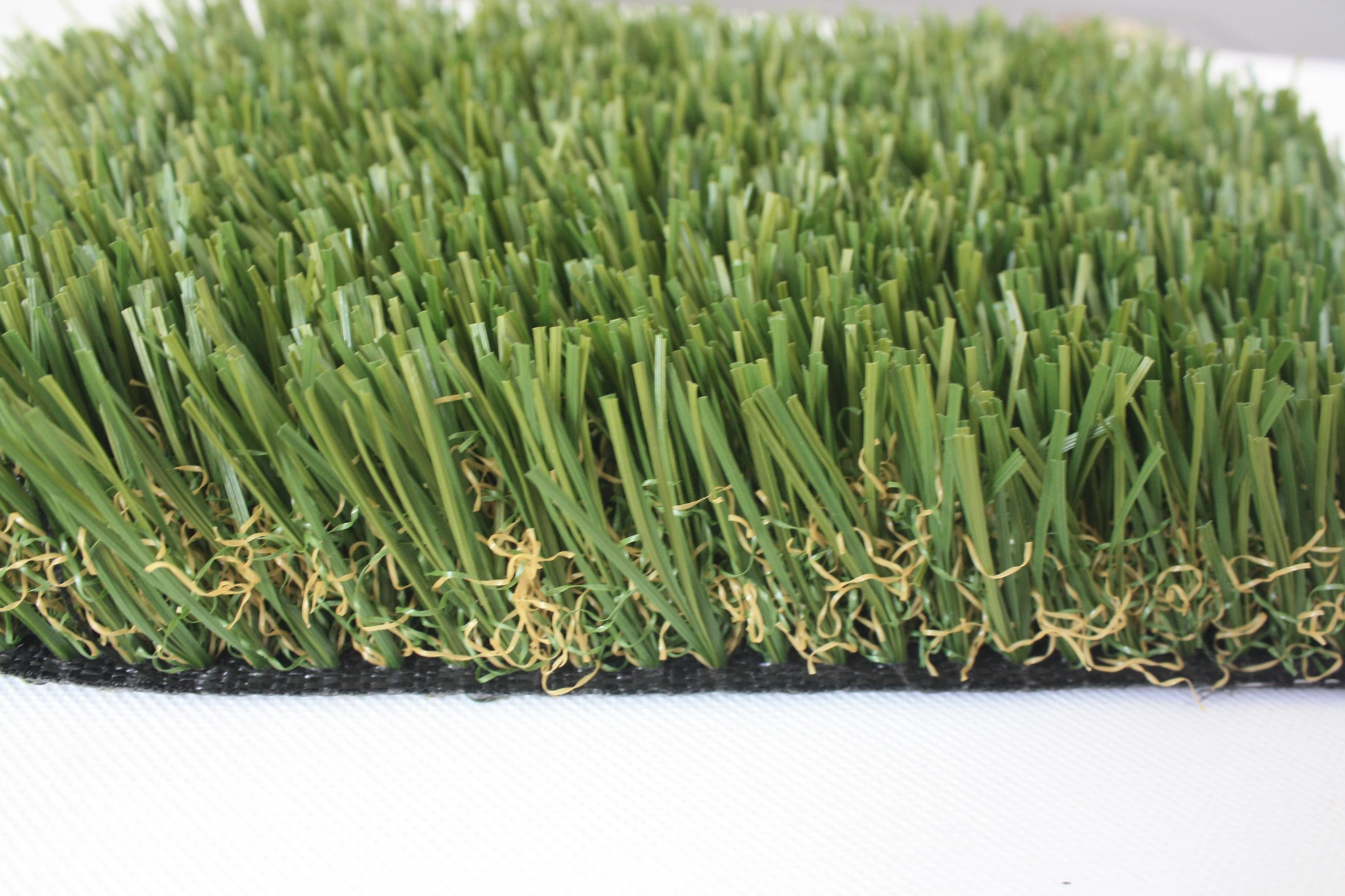
Playground Turf Is a System, Not Just Grass
Artificial grass of the kind sold for patios and balconies does not protect a child who falls from a climber. Playground turf gets its fall protection from what lies beneath it. A typical system has three parts:
- A prepared base of compacted aggregate, graded so water drains away.
- A shock-absorbing pad, usually foam or bonded rubber, chosen and sized for the fall height of the equipment.
- The turf itself, synthetic fibers stitched into a backing, often with infill brushed between the blades to hold them upright and add weight.
The pad and turf together should be tested as one system for impact attenuation at the fall height of your equipment. That protection is needed inside the use zones, the areas around equipment where a child could fall or land. Use zones are defined in the federal playground safety guidance published by the US Consumer Product Safety Commission. Outside those zones, on open lawns and around seating, turf can be laid without the pad.
Benefits of Synthetic Turf in Play Areas
Green in every season
Natural grass under play equipment wears down to dirt in the busiest spots and goes dormant in heat or cold. Turf stays green and even all year, which keeps the play area looking cared for.
No mowing, watering or fertilizing
Turf does not need irrigation, mowing, fertilizer or weed treatment. That saves staff time and is a real advantage in hot, dry regions where keeping a lawn alive takes a lot of water, or where watering is restricted. An occasional rinse to clean it is about all the water it uses.
Accessible and stroller friendly
A properly installed turf system gives a firm, level surface that wheelchairs, walkers and strollers can roll across. Ask for results showing the complete system has been tested for accessibility under ASTM F1951.
Clean and contained
There is no loose material to scatter, no mud after rain and less dirt carried indoors, which matters to daycares and schools whose play areas sit right outside classrooms.
Drains after rain
Turf backings are perforated or permeable, so water passes through to the drainage base. Play areas can reopen soon after a storm instead of staying muddy for days.
No grass pollen
Synthetic turf does not produce grass pollen, which helps children who react to it.
Drawbacks to Plan Around
- Surface heat. Synthetic turf can get much hotter than natural grass in direct summer sun. Shade structures over the play area, lighter-colored products and scheduling outdoor time for cooler hours all help, and a rinse cools the surface for a short while.
- Higher cost than a lawn or loose fill. A padded turf system costs more to install than seeding grass or spreading loose fill. The trade is lower ongoing maintenance and no topping up.
- Wear in the busiest spots. Fibers flatten and infill shifts under swings and at slide exits, so those areas need attention sooner than the rest.
- Not a permanent surface. Fibers wear and fade with sunlight and use, and the turf will eventually need replacing.
Caring for Synthetic Turf
- Clear leaves, litter and debris with a leaf blower or rake on a regular schedule.
- Brush the fibers against the grain from time to time so they stand up, especially in high-traffic areas.
- Check infill levels and redistribute or top up where it has thinned, particularly under swings and at slide exits.
- Rinse off dust, and clean up spills and any animal waste promptly.
- Look for lifting seams, loose edges and worn patches, and have them repaired early.
Include the turf in regular playground inspections too, because a worn pad or thinned infill can reduce how well the surface cushions a fall. A-OK Playgrounds offers CPSI-certified safety inspections with a written report and repair plan.
Where Synthetic Turf Works Best
Turf is a strong fit for daycares and preschools, where a clean, soft-looking surface next to the building matters. It suits HOA and apartment community play areas that need to look tidy all year, and schools and churches that want one consistent green surface across a play area and the lawn beside it. It is also worth a look anywhere irrigation is limited or a natural, green look fits the design of the space.
Frequently Asked Questions
Can artificial grass go under playground equipment?
Yes, but only as a tested system with a shock-absorbing pad sized to the fall height of the equipment. Turf laid straight onto soil or concrete does not provide fall protection.
Can we switch an existing playground to turf?
Often, yes. The existing surface is removed, the base is prepared and graded for drainage, and the pad and turf are fitted around the equipment. A site assessment confirms what the base needs before work starts.
Talk to A-OK Playgrounds About Turf Surfacing
Synthetic turf is one of the playground safety surfacing options from A-OK Playgrounds, with design help and professional installation available in many areas. Call 512-826-8800, email [email protected] or request a quote. Digital catalogs are available on request.