

In the hottest months, a park or playground can sit nearly empty in the middle of the day. Families wait for evening, spectators bring their own pop-up canopies, and the picnic tables bake in the sun. A well-planned park shelter changes that. It gives people a cooler place to gather, rest between games and keep an eye on children, and it can turn a space that only works in spring and fall into one that works all summer.
This guide is for parks and recreation departments, HOA boards, schools and property managers. It covers where to put a shelter, how to size and shape it for heat, how to keep the ground around it cooler, and how to run and look after it through the summer.
Start with the Sun, Not the Empty Space
The most common shelter mistake is building where there happens to be room instead of where people need shade. Before choosing a spot, watch how the site is used on a hot afternoon:
- Where do parents stand or sit while children play?
- Where do spectators gather at courts and fields?
- Where do people wait for rides or stop to eat lunch?
- Which areas sit in full sun in the afternoon, when the heat builds?
Then remember that shade moves. Across the continental United States the midday sun sits to the south, so the shadow under a roof falls to the north, and as the sun moves into the western sky the shadow slides toward the east through the afternoon. Setting the shelter slightly south and west of the seating you want covered puts its shade on those tables during the hours that matter most. Also plan an accessible route from parking and paths to the shelter, and leave room at the tables for wheelchair users; the ADA sets the accessibility requirements that public sites must meet.
Size and Shape the Shelter for Heat
A shelter that is just big enough for its tables at noon will leave them half in the sun by mid-afternoon, because the shaded footprint shifts as the sun drops. Plan for more roof than the furniture strictly needs, especially on the side facing the afternoon sun.
Roof shape affects more than looks:
- Square and rectangular shelters suit rows of picnic tables and fit neatly along paths, courts and fields.
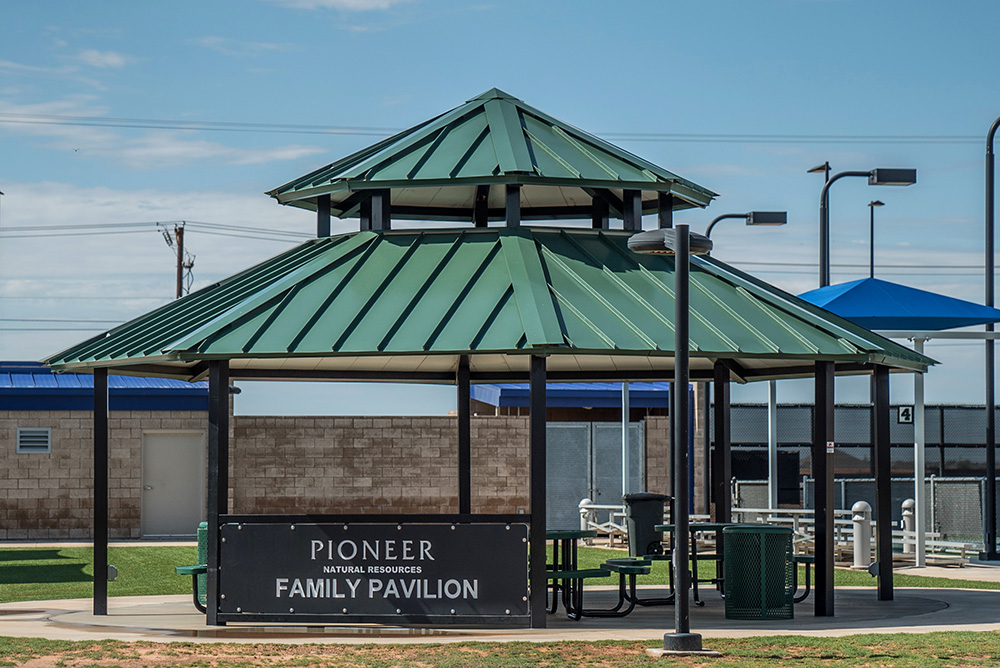
- Hexagon and octagon shelters, like the one pictured, spread shade evenly in every direction and make a natural central gathering point.
- Two-tier or vented roofs give hot air that collects under the peak a way out, so the space feels less stuffy.
- Open sides let any breeze pass through. Avoid enclosing more than you need for wind protection.
Roof height is a balance. A taller roof feels airier and lets heat rise away from people, while a lower roof keeps more of the floor shaded when the sun is low. A solid roof also keeps summer storms off people and tables. You can compare shapes and sizes among our park shelters.
Keep the Ground Around It Cooler
A roof solves only half the problem. Sun-baked surfaces around a shelter throw heat back at the people sitting in its shade. A few choices make a noticeable difference:
- Use lighter-colored concrete under and around the shelter rather than dark asphalt where you can
- Keep grass or planting beds next to the slab instead of adding more paving
- Plant shade trees on the south and west sides to support the shelter as they grow
- Keep all seating fully under the roof, and choose table finishes that stay comfortable to touch
- Put a drinking fountain or bottle filler within easy reach of the shelter
If the shelter serves a playground, think about the play surface as well. Different playground safety surfacing materials behave differently in full sun, so ask how a surface handles heat before you choose one.
Run the Shelter Differently in Summer
Good design gets people into the shade. A few operating habits keep them comfortable and safe once they are there:
- Shift reservations. Encourage morning and evening bookings for parties and events, and make midday the exception rather than the default.
- Brief the groups who book it. Remind event hosts to bring plenty of water, plan breaks for active games and know the signs of heat illness.
- Keep amenities working. Test fountains and bottle fillers before the season starts, and empty trash more often in hot weather, when food waste draws insects and odors quickly.
- Plan for storms. A shelter keeps rain off, but an open-sided structure is not a safe place during lightning. When thunder is heard, people should move to a fully enclosed building or a hard-topped vehicle.
A Hot-Season Checklist for Shelters
Strong sun, heat and sudden storms are hard on outdoor structures. Work through these checks at the start of summer and again after any major storm:
- Roof panels and trim are secure, with no lifted edges or missing fasteners
- Columns and base connections show no rust, cracks or movement
- Gutters and the ground around footings drain properly, with no washouts
- Painted and coated surfaces have no chips or scrapes that could lead to corrosion
- Tables, benches and their anchors are tight, with no sharp edges or splinters
- Light fixtures and any outlets are intact and covered, if the shelter has them
Write down what you find each time. A simple log makes it easier to spot a problem that is getting worse and to plan repairs into next year’s budget.
Frequently Asked Questions
Should the shelter go over the playground or next to it?
Usually next to it. A shelter beside the play area gives parents and caregivers a shaded place to sit with a clear view of their children, and it keeps columns out of the space around play equipment. If you want shade directly over the equipment, a fabric shade structure designed for playgrounds is generally the better fit.
How can a parks department or HOA budget for a shelter?
Public and community buyers usually work around fiscal years, grant cycles and board approvals. A-OK Playgrounds offers financing and leasing built around those timelines for schools, churches, HOAs and municipalities.
Plan Your Shelter with A-OK Playgrounds
A-OK Playgrounds supplies shade structures and park shelters, and its 3D design and site planning help you see where a shelter will do the most good before anything is built. Call 512-826-8800, email [email protected] or request a quote. Digital catalogs are available on request.