

A family entertainment center (FEC) built around indoor playground equipment can become a weekly habit for local families: a place for open play on rainy afternoons, birthday parties on weekends and group visits during the week. The play structure is the reason people come, but the business decisions you make before choosing it decide whether the center works.
This guide is for owners and investors planning a new FEC. It covers who to build for, what to look for in a building, how to lay out play zones, how the equipment supports your revenue, and the safety and staffing routines to plan from day one.
Decide Who Your Center Is For
Every other choice follows from your audience, so define it first. A center aimed at toddlers and their parents looks very different from one built for school-age children and birthday groups.
- Ages. Play equipment is designed for specific age ranges, so decide whether you are serving toddlers, school-age children or both. Centers that serve both usually give toddlers their own area so the youngest children can play without being run over.
- Visit type. Decide whether you are mainly selling drop-in open play, memberships, parties, group bookings or a mix. Each one needs different space.
- The local market. Visit nearby play centers, trampoline parks and other family venues. Look for what families in your area cannot already get, such as a toddler program on weekday mornings or a themed experience nobody else offers.
Choose a Building That Can Hold the Play
It is tempting to sign a lease first and then look for equipment to fit it. Reverse that order: know what the play area needs before you commit to a space.
- Ceiling height. Soft contained play structures are built to the room size and ceiling height, and multi-level structures need generous clearance above the top deck. Measure to the lowest duct, light or framing member, not just the ceiling.
- Open floor area. Columns break up a play structure’s footprint, so a space with fewer of them gives you more design freedom.
- Zoning, occupancy and permits. Ask the local building department whether the space can be used as an indoor amusement or assembly venue, and what that means for exits, restrooms, sprinklers and how many people you can hold.
- Everything around the play. Parking, restrooms, one or more party rooms, a check-in counter, storage and, if you plan to serve food, a kitchen or prep area.
Bring the floor plan to your equipment supplier before you sign. Our 3D design and site planning service shows how the play structure, toddler area and party rooms fit in a specific space.
Lay Out Play Zones and Sightlines
A good FEC layout lets parents relax while still seeing their children. Plan the floor in zones:
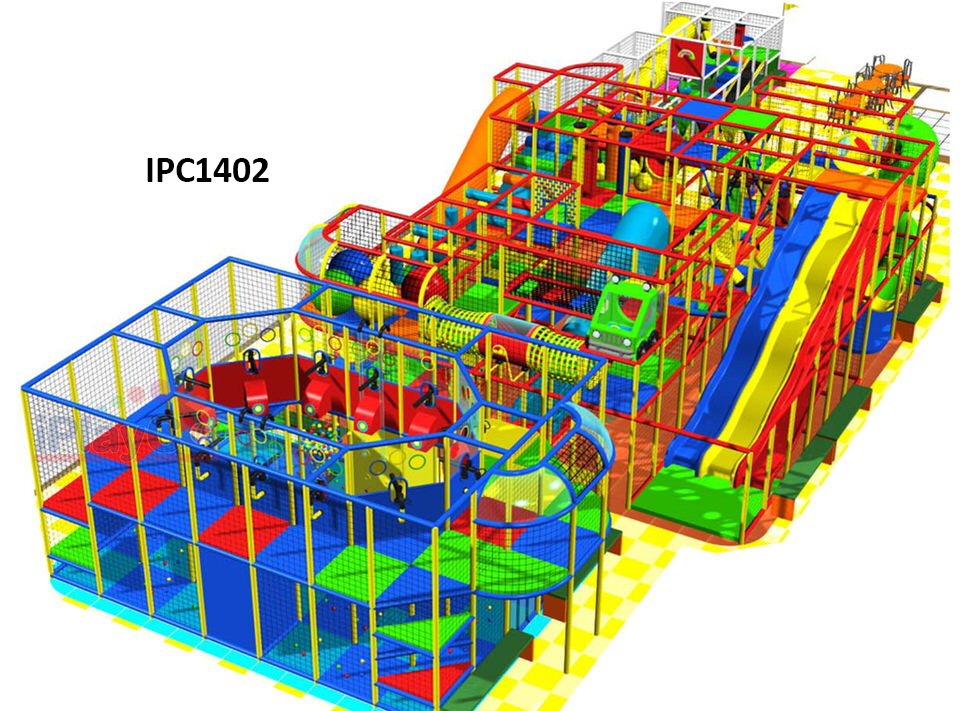
- The main play structure is the anchor attraction. A multi-level indoor play structure with slides, climbers and crawl tunnels gives older children a reason to explore for hours.
- A toddler zone with low, soft indoor toddler play pieces keeps the youngest visitors safe and gives parents of small children a reason to come on weekday mornings.
- Interactive games, such as floor and wall projection games or virtual reality attractions, add variety for older children and give repeat visitors something new to try.
- Party rooms sit close to the play area but apart from it, so groups can eat and open presents without blocking the floor.
- Parent seating needs clear sightlines into every zone, and the whole floor works best with one controlled entrance and exit so children cannot wander out.
Custom theming ties the zones together. A theme that matches your name and branding makes the center easy to recognize and photograph, which helps every marketing effort that follows.
Build the Revenue Model Around the Equipment
Admission is only one income stream for most FECs. Plan the others while you design the space, because each depends on room and equipment decisions:
- Open play is sold by the hour or the day, and how much you can sell depends on how many children the play area holds at once.
- Memberships and punch cards reward local families who visit often, and they only work if there is enough variety to keep children interested.
- Birthday parties are a steady source of weekend bookings, limited by how many party rooms you have.
- Group visits from daycares, schools, churches, camps and homeschool groups fill weekday hours when the floor would otherwise be quiet.
- Food, drinks and retail grow with comfort: parents who can sit, see their children and relax stay longer.
Estimate your busiest hour, then check that the play structure, toddler zone and party rooms can serve it. Equipment that is too small caps your income, and equipment too large for your demand ties up money and floor space.
Plan Safety, Cleaning and Staffing from Day One
Parents choose indoor play centers partly because they feel controlled and clean. That reputation comes from daily routines, not just from the equipment.
- Standards. Choose soft contained play equipment that meets the ASTM International standard for soft contained play (ASTM F1918), and have it installed to the maker’s instructions.
- Cleaning. Plan daily wipe-downs of high-touch surfaces and regular deep cleaning inside the structure, and set aside quiet hours or a closed day for it.
- Staffing. Decide how many attendants the play floor needs at peak times and train them on rules, check-in, sock policies and what to do when a child is hurt or lost.
- Daily checks. A walk-through before opening catches loose netting, torn padding and missing fasteners. Log what you find and fix it before children play.
- Insurance and waivers. Talk to an insurer and an attorney about coverage, waivers and incident reporting before you open.
Frequently Asked Questions
How much space does an indoor playground need?
It depends more on your business plan than on the equipment. Play structures are designed to fit the room, so the real question is how many children you need to hold at your busiest hour, plus the space for party rooms, seating, check-in and circulation.
What order should I do things in?
Define your audience and revenue model, shortlist buildings, then get a play design for your preferred space before you sign the lease. Permits, funding and the equipment order follow from that design. Ask about professional installation for your location, and schedule it once the building work is far enough along.
Can the play structure match my brand?
Yes. Theming can carry your colors, characters and story through the play structure and the toddler area, so the center feels like one place rather than a room with equipment in it.
Plan Your Family Entertainment Center with A-OK Playgrounds
Share your floor plan, ceiling height and the ages you want to serve, and we will help you shape a play design that fits the space and the business. Call 512-826-8800, email [email protected] or request a quote. Digital catalogs are available on request.